Every spring, American farmers spread roughly 70 million pounds of a weed killer called atrazine on corn, sorghum, and sugarcane fields. Last month, California's Office of Environmental Health Hazard Assessment announced it intends to add atrazine to the state's Proposition 65 list of chemicals known to cause cancer. That makes this a good moment to understand what atrazine is, how it ends up in drinking water, and what the picture looks like here in Northern California.
What California just did
On October 9, OEHHA published a Notice of Intent to List atrazine as a carcinogen under Proposition 65, the 1986 law behind the warning labels Californians see on everything from parking garages to coffee cups. The listing uses what's called the Labor Code mechanism, which kicks in automatically when the World Health Organization's cancer research agency, IARC, classifies a chemical. IARC did exactly that last November, concluding atrazine is "probably carcinogenic to humans." The public comment period runs through November 9, and OEHHA has said the listing is ministerial, meaning comments can address only whether IARC's finding applies, not re-argue the science.
This isn't the state's first move on the chemical. California listed atrazine as a reproductive toxicant in 2016, and the state's legal limit in drinking water is 1 part per billion, tighter than the federal limit of 3 ppb that EPA set in 1991. The federal government, meanwhile, dismissed IARC's classification last year and is moving toward reapproving atrazine for roughly two more decades, a decision that drew a lawsuit from three environmental groups on October 14.
How a farm chemical reaches a kitchen faucet
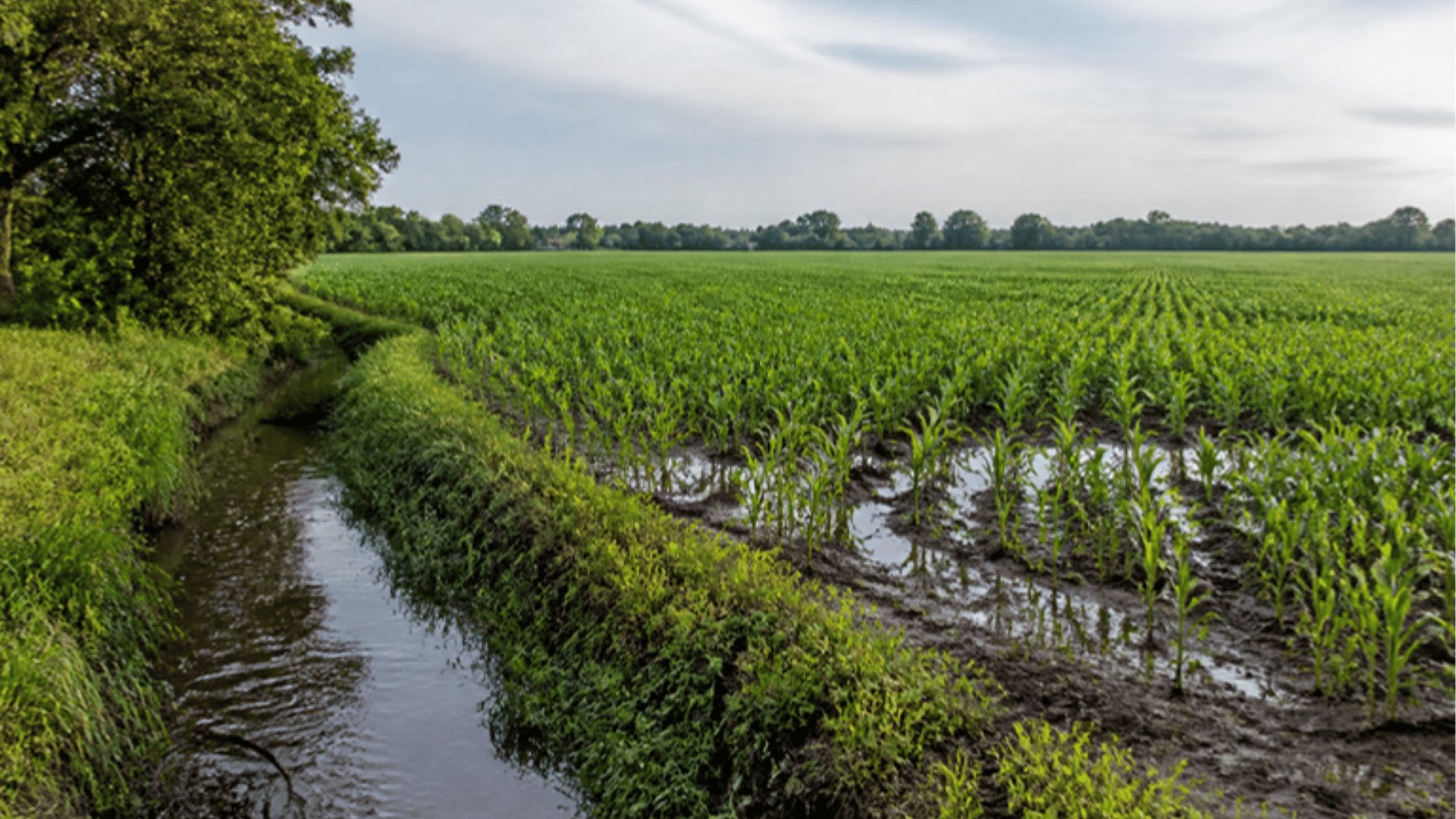
Atrazine is applied to soil and taken up through plant roots, which makes it very effective at killing weeds and very easy to wash away. Spring rains carry it off fields into streams and rivers, and from there into the reservoirs and groundwater that supply towns. The Center for Biological Diversity estimates that about a quarter of all river miles in the continental U.S. carry atrazine at levels EPA considers harmful to aquatic life.
The Environmental Working Group's Tap Water Database, built from utility testing between 2017 and 2019, found atrazine in the water of 2,321 utilities serving 43 million people across 36 states. No utility exceeded the federal legal limit, but 1,457 of them, serving about 19 million people, were above EWG's much stricter health guideline of 0.1 ppb, which EWG based on human studies of atrazine exposure through drinking water. One detail matters for anyone reading a water report: utilities report annual averages, and EWG notes those averages "underestimate intense spikes" that arrive in late spring and early summer right after application.
The Northern California picture
Here's the reassuring part. Atrazine is overwhelmingly a Corn Belt story. EWG's data shows the heaviest detections in Texas, Kansas, Missouri, Illinois, Ohio, and Pennsylvania; Kansas and Missouri systems top the list for highest averages. California grows relatively little corn, and the Sacramento, Placer, El Dorado, Sonoma, and Marin water systems draw mostly on Sierra snowmelt, the American and Russian rivers, and local reservoirs rather than farm-belt runoff. California's 1 ppb standard and its public health goal of 0.15 ppb, set in 1999, are also among the strictest in the country.
That said, the Central Valley is one of the most intensively farmed places on Earth, and atrazine is one of many herbicides in use there. Homes on private wells in agricultural areas, and smaller systems that rely on shallow groundwater near farmland, are the ones with a real reason to check.
How to find out what's in yours
Start with your utility's annual Consumer Confidence Report, which lists every regulated contaminant detected in the past year, including atrazine if it turned up. Then look up your zip code in EWG's Tap Water Database (ewg.org/tapwater), which lays the same results next to health-based guidelines rather than just legal limits. If you're on a well, atrazine is a standard item on an agricultural pesticide panel at any certified lab.
For homes that do want a barrier, the science is clear on what works. EWG lists two technologies for atrazine: activated carbon and reverse osmosis. Carbon is the workhorse of whole-home filtration, designed to address chlorine, chloramine, taste and odor, and a wide range of organic chemicals like herbicides as water enters the house. Reverse osmosis at the kitchen sink pushes water through a membrane designed to address dissolved contaminants, including pesticides, nitrates, PFAS, and lead, for the water you actually drink and cook with. Testing at the tap tells you whether either one is worth having.
Curious what's in your water? Book a complimentary water test — about 30 minutes, no obligation.
Healthier water, healthier family.
Sources
- California OEHHA, "Notice of Intent to List Chemicals by the Labor Code Mechanism: Atrazine," October 9, 2026 — https://oehha.ca.gov/proposition-65/crnr/notice-intent-list-chemicals-labor-code-mechanism-atrazine
- The New Lede, "As EPA shrugs, California designates atrazine weed killer as cancer risk," October 9, 2026 — https://www.thenewlede.org/2026/10/as-epa-shrugs-california-designates-atrazine-weed-killer-as-cancer-risk/
- Environmental Working Group, Tap Water Database: Atrazine (2017–2019 utility data) — https://www.ewg.org/tapwater/contaminant.php?contamcode=2050
- Center for Biological Diversity, "Lawsuit Challenges Trump EPA's Failure to Cut Pesticide Pollution in Waterways, Drinking Water," October 14, 2026 — https://biologicaldiversity.org/w/news/press-releases/lawsuit-challenges-trump-epas-failure-to-cut-pesticide-pollution-in-waterways-drinking-water-2026-10-14/
- IARC Monographs, evaluation of the carcinogenicity of atrazine, alachlor and vinclozolin, November 2025 — https://www.iarc.who.int/news-events/iarc-monographs-evaluation-of-the-carcinogenicity-of-atrazine-alachlor-and-vinclozolin/