Folsom's water treatment plant has been running on two leaking chemical tanks since summer. On Tuesday the City Council voted 5-0 to spend nearly $918,000 to replace them on an emergency basis, the Sacramento Bee reported this week. The city says drinking water was never at risk, and the story is a useful window into a part of the system most of us never think about: the chlorine that goes into every gallon before it reaches a Folsom faucet, and the same chemistry at work in nearly every system in the region.
What happened at the plant
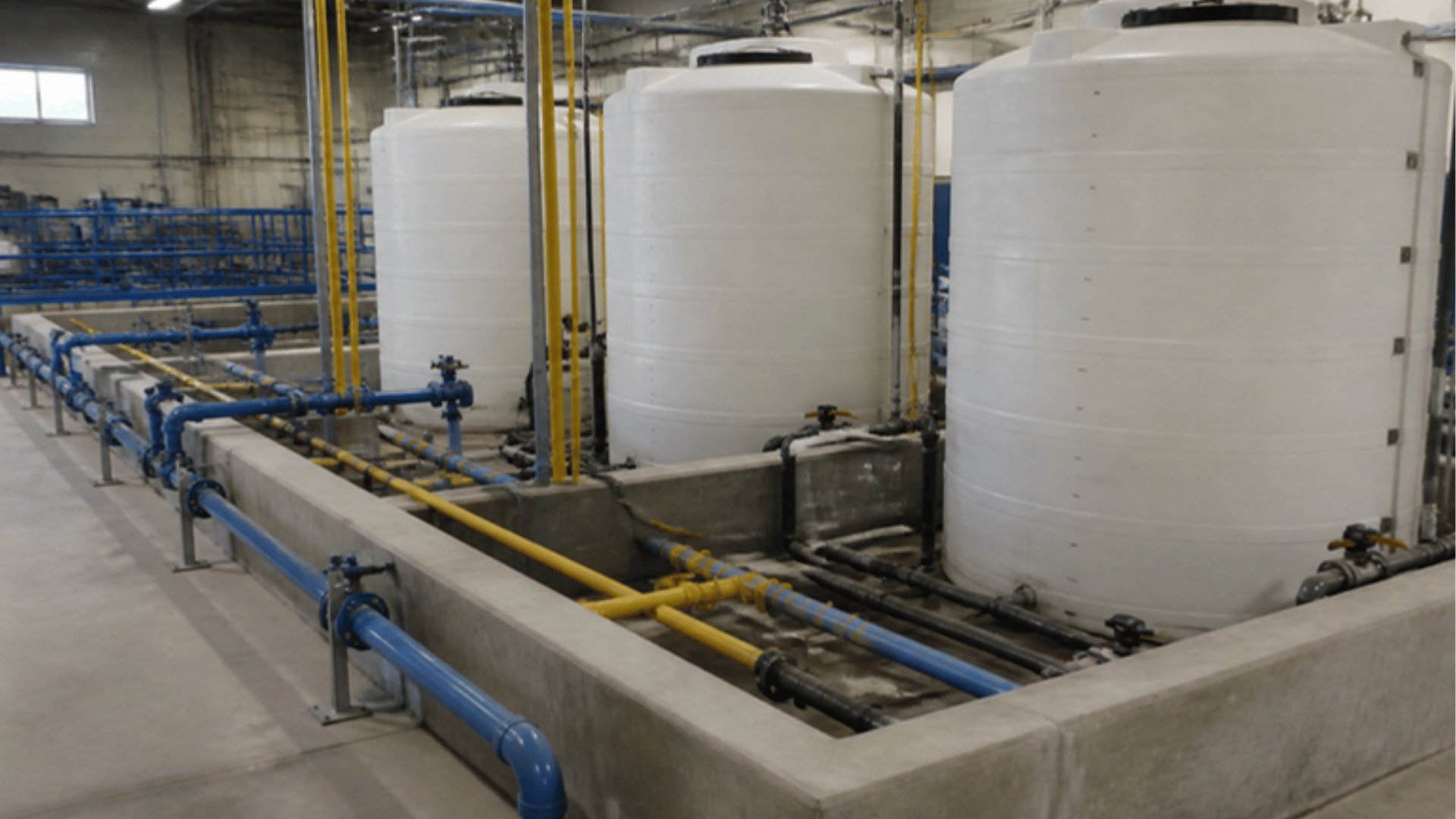
The tanks hold sodium hypochlorite, a chlorine-based disinfectant in a 12.5 percent solution, the same chemical family as household bleach but far stronger. According to the city staff report cited by the Bee, the first 8,500-gallon tank began leaking on July 22. Plant staff judged the leak minimal and manageable and planned to make repairs in winter, since both tanks were needed to meet summer demand. Then a second tank sprang a leak on September 10 in a spot that required outside contractors.
The tanks have an expected service life of up to 15 years and have been in use for more than 20, with repairs in 2015, 2020, 2021, and 2025. An engineering consultant recommended immediate replacement, and the staff report classified the situation as an emergency, citing the potential for employee exposure and chemical reactions. Utilities Director Marcus Yasutake told the council the leaks did not threaten drinking water quality or service, because the tanks could still deliver disinfectant to the treatment process, and the city determined there was no risk of environmental contamination.
The new tanks will be double-walled polyethylene, just under 9,000 gallons each, and are expected to arrive by the end of November. The work is being folded into a separate $3.2 million upgrade already underway at the plant, which replaces a lime feed system with caustic soda and will let the plant treat its full 50 million gallons per day rather than the 30 million the old lime system could handle.
Why a water plant needs chlorine in the first place
Chlorine is the reason waterborne diseases like cholera and typhoid are history in American cities. According to the CDC, U.S. utilities first used chlorine to kill germs in tap water in 1908, and most still rely on it or on chloramine, a chlorine-ammonia compound first used in 1929. Folsom uses sodium hypochlorite to disinfect water drawn from Folsom Lake at a plant that can treat up to 50 million gallons a day, as Gold Country Media reported when the city renewed its chemical supply contract in 2024.
A disinfectant has two jobs. The first is killing microbes at the plant. The second is staying in the water, at a low level, all the way through miles of pipe so nothing grows on the way to your house. That residual is what you smell when you fill a glass. The CDC notes that chlorine gets used up quickly in water, which is why many utilities choose chloramine, which lasts longer in pipes and produces fewer disinfection byproducts. Byproducts form when chlorine reacts with natural organic material in the water, and the CDC says that at high enough levels they can cause health problems over time, which is why utilities test for them.
What that means at your tap
Levels up to 4 parts per million of chlorine or chloramine are considered safe in drinking water, and the CDC is plain that "the low levels of disinfectants allowed in tap water do not make people sick." Chlorine is doing essential work right up until the moment water leaves your faucet. After that, its job is done, and what's left is mostly a matter of taste, smell, and skin.
That's where a lot of homeowners decide to intervene. Chlorinated water tastes and smells different from water without it, and the difference is stronger when levels are higher or when there is more organic material in the source. Aquarium owners already know the drill: the CDC advises never keeping fish, turtles, or frogs in water that contains chlorine or chloramine, because they absorb it directly into their bloodstream. Dialysis centers are required to strip both chemicals out completely before use. For everyone else, it's a preference, and a common one.
Whole-home filtration systems use activated carbon, which is designed to address chlorine and chloramine along with sediment, taste, and odor at the point where water enters the house, so showers, laundry, and every tap get the same treatment. Reverse osmosis at the kitchen sink adds a membrane designed to address dissolved contaminants like nitrates, PFAS, and lead for drinking and cooking water.
How to see your own numbers
Folsom, like every utility, publishes a Consumer Confidence Report each year that lists the average and range of chlorine residual in the system, along with disinfection byproduct results. The Environmental Working Group's Tap Water Database (ewg.org/tapwater) shows the same data by zip code alongside health-based guidelines. And chlorine residual is one of the simplest things to measure at the tap, so an in-home test will tell you exactly what's arriving at your kitchen sink today.
Curious what's in your water? Book a complimentary water test — about 30 minutes, no obligation.
Healthier water, healthier family.
Sources
- Sacramento Bee (Daniel Lempres), "Folsom's water treatment tanks leaked for months. City approves $918K to replace them," October 30, 2026 — https://www.sacbee.com/news/local/article317837879.html
- City of Folsom / CEQAnet, "Water Treatment Plant Caustic Soda Storage and Feed System Project," posted January 13, 2026 — https://ceqanet.lci.ca.gov/2026010302
- Gold Country Media via Water Education Foundation, "Folsom City Council approves contract to purchase water treatment chemical," January 11, 2024 — https://www.watereducation.org/aquafornia-news/folsom-city-council-approves-contract-purchase-water-treatment-chemical
- CDC, "About Water Disinfection with Chlorine and Chloramine," reviewed February 14, 2024 — https://www.cdc.gov/drinking-water/about/about-water-disinfection-with-chlorine-and-chloramine.html
- Environmental Working Group, Tap Water Database — https://www.ewg.org/tapwater/