This week the EPA staged its first public demonstration of new tools for finding buried lead pipes, and the headline from its Region 2 administrator was simple: "You can't replace what you can't find." Here in California, the search is mostly over, and the result was good news: the State Water Board's statewide inventory turned up no lead service lines at all. But a clean pipe in the street is only part of the story. For homes built before the late 1980s in Folsom, Roseville, Carmichael, Santa Rosa or San Rafael, the plumbing most likely to shed lead is the plumbing inside your own walls.
What the state inventory actually found
Under the federal Lead and Copper Rule, every community water system in the country had to catalog the material of each service line, the pipe running from the main to the house, by October 16, 2024. California's results came out in February: the State Water Board reported no lead in nearly 10 million service connections, and its deputy director for drinking water said that record puts the state ahead of the nation. The EPA has estimated that up to 9 million homes nationwide are connected to lead lines, so California's result reflects how young most of its housing stock is.
There is a footnote. About 600,000 California lines, roughly 6 percent, are still listed as "unknown material" and need more checking. The Board expects very few of them, if any, to be lead. Folsom residents got a taste of what that process looks like when the city mailed letters to about 6,600 households in late 2024 asking them to look at the pipe beside the front hose spigot and report whether it was copper, galvanized steel or plastic, according to CBS Sacramento. The city had already cleared roughly 20,000 lines from maps and construction records; the letters covered the gaps.
Why the pipe in the street isn't the whole picture
The inventory stops at your property line. As the Water Board put it, the data "does not reflect piping, solder and fixtures inside a building." That is where lead tends to live in a California home.
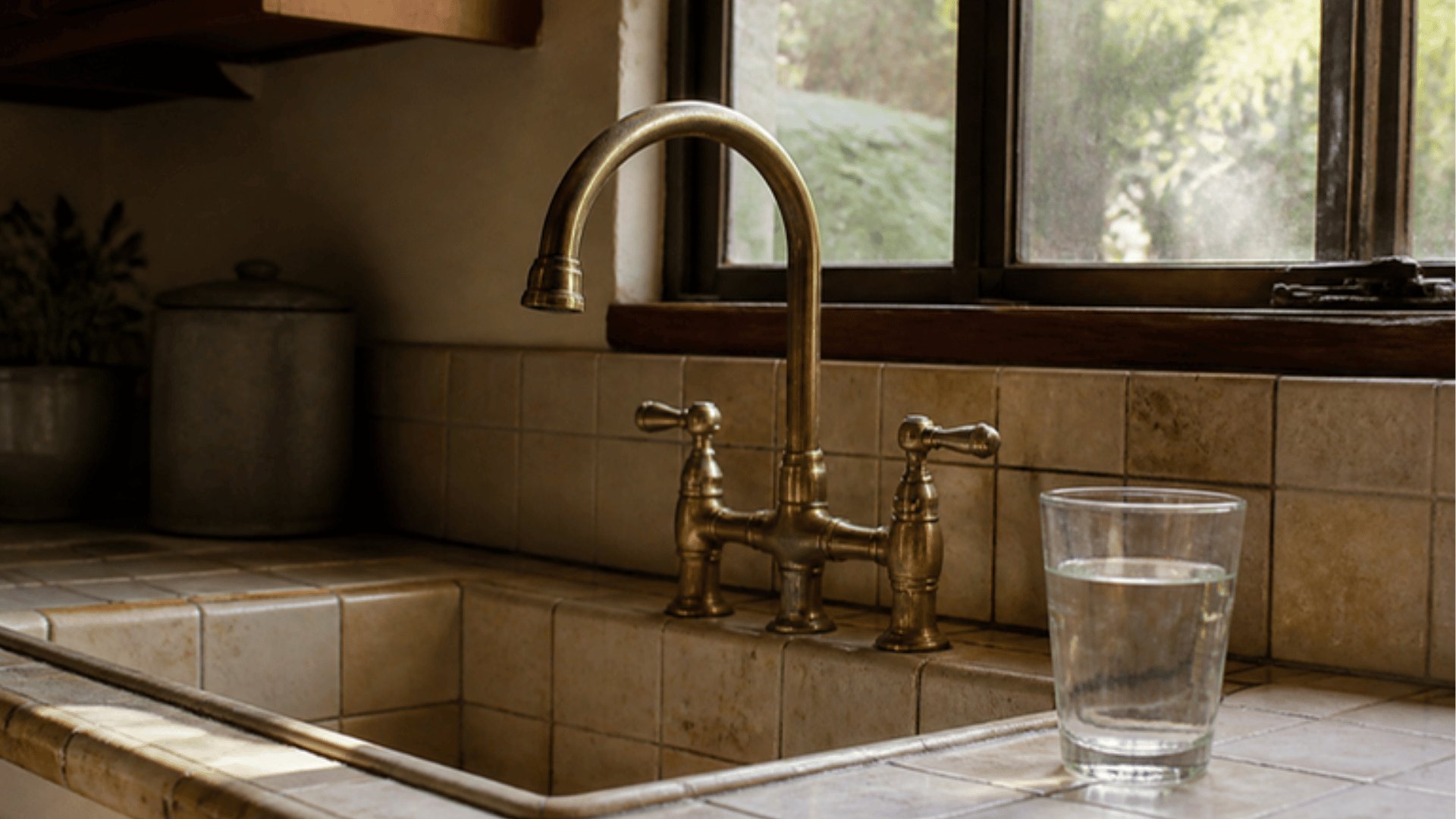
Until the federal ban took effect in 1986, plumbers routinely joined copper pipe with solder that was about half lead. Brass faucets, valves and fittings were allowed to contain up to 8 percent lead until California's stricter lead-free standard took effect in 2010, and the federal definition caught up in 2014. Water that sits in those fittings overnight, or runs hot, can pick up small amounts of the metal. That is why the Water Board's own advice is to make sure fixtures and interior piping are certified lead-free, "especially if installed before 2010," and why the EPA recommends running the cold tap for a bit before filling a glass first thing in the morning, and never using hot tap water for cooking or formula.
Lead matters because the body stores it, and children absorb far more of what they swallow than adults do. The Board notes the biggest sources of childhood lead exposure in California are still old paint and contaminated dust and soil, not water, but plumbing is the one source a homeowner can check and change in an afternoon.
The money that was paying for replacements is running out
Nationally, the picture is getting harder. Circle of Blue reported this week that the 2021 infrastructure law's extra water funding, around $43 billion over five years including $15 billion earmarked for lead service line replacement, expired in September. State revolving fund dollars are expected to fall by about 80 percent from last year's levels, and lead projects now have to compete with every other eligible water project. Roughly 4 million lead lines remain nationwide, with full replacement under the EPA's updated rule due to start by November 1, 2027 and run ten years.
California systems don't have mains to dig up, but the remaining "unknown" lines still have to be verified, and that work is now less likely to come with federal help. If your utility sends a letter like Folsom's, answering it is how your line gets off the unknown list.
How to check your own home
Start with the free tools. The State Water Board's statewide service line map lets you type in an address and see what your utility reported for your line; Folsom, Roseville, Sacramento County and Sacramento Suburban Water District all post their own lookup pages too. Then look at the house itself: the year it was built and whether the kitchen faucet predates 2010.
The only way to know what reaches your glass is to test water at the tap, ideally a first-draw sample after the water has sat for several hours. Lead that does turn up is dissolved, so it is not something a sediment or carbon filter is built to catch. Reverse osmosis is the treatment designed for dissolved metals like lead, along with nitrates and PFAS, which is why an RO system at the kitchen sink pairs naturally with a whole-home system handling chlorine, hardness, taste and odor for the rest of the house.
Curious what's in your water? Book a complimentary water test — about 30 minutes, no obligation.
Healthier water, healthier family.
Sources
- California State Water Resources Control Board, "California leads nation with no reported lead service lines in drinking water systems," February 4, 2026 — https://www.waterboards.ca.gov/press_room/press_releases/2026/pr20260204-lsl-inventory-launch.html
- U.S. EPA, "EPA Hosts First-Ever Public Demonstration of Emerging Technologies to Identify Lead Service Lines," November 10, 2026 — https://www.epa.gov/newsreleases/epa-hosts-first-ever-public-demonstration-emerging-technologies-identify-lead-service
- Circle of Blue, "The $43 Billion Water Boost Is Over. Now What?," November 7, 2026 — https://www.circleofblue.org/2026/water-policy-politics/the-43-billion-water-boost-is-over-now-what/
- CBS Sacramento, "City of Folsom warns residents some home water pipes may contain lead," November 19, 2024 — https://www.cbsnews.com/sacramento/news/folsom-warns-water-pipes-may-contain-lead/
- U.S. EPA, "Basic Information about Lead in Drinking Water" — https://www.epa.gov/ground-water-and-drinking-water/basic-information-about-lead-drinking-water
- California State Water Resources Control Board, Statewide Service Line Inventory Map — https://gispublic.waterboards.ca.gov/portal/apps/experiencebuilder/experience/?id=53f1ff6b98014598a4101de4ca9e54e9