
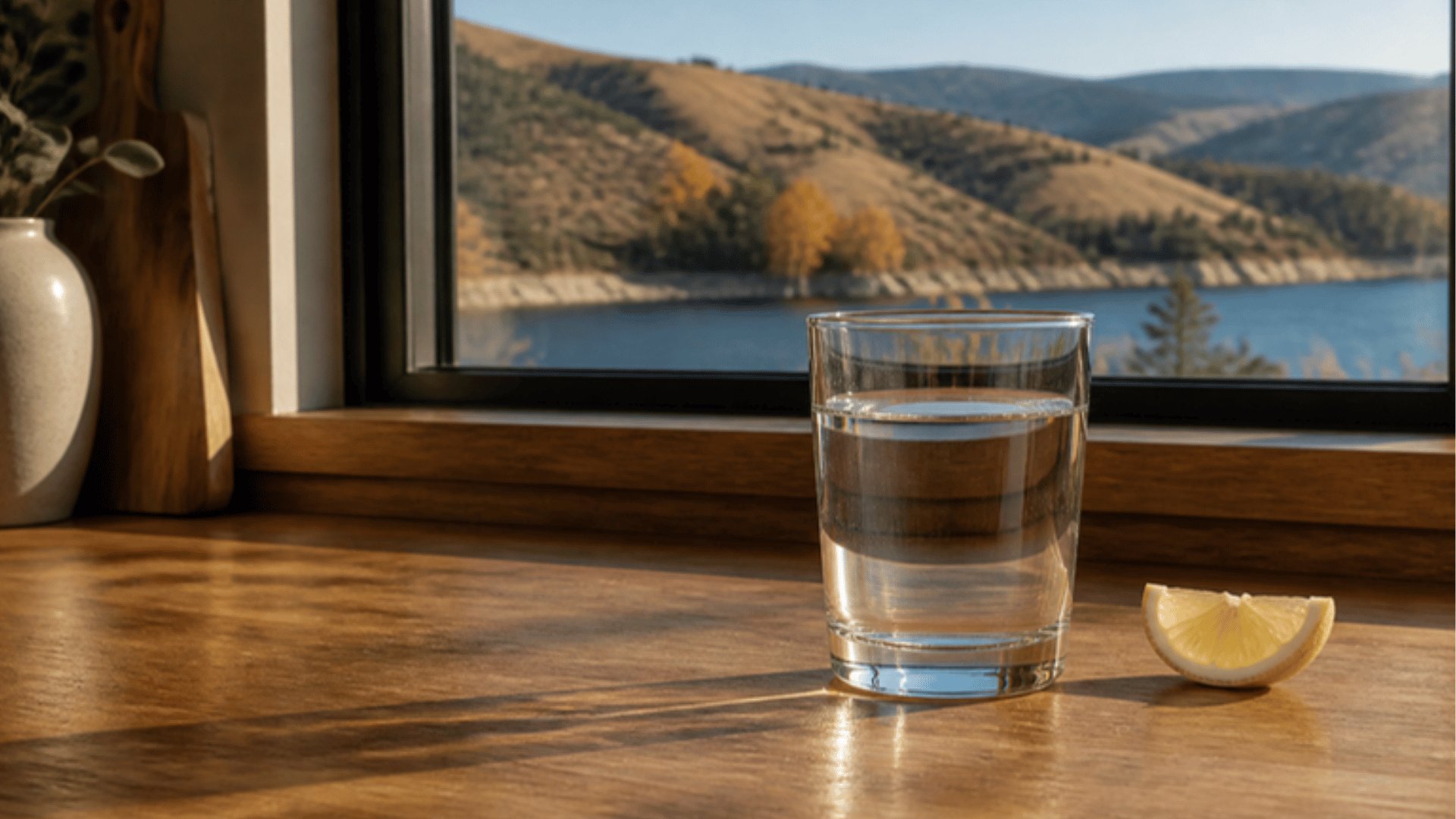
If you have ever poured a glass of water in October and thought it tasted faintly like a damp basement, you were not imagining it. This week, San Luis Obispo County told residents of Pismo Beach, Arroyo Grande, Grover Beach, Oceano, Avila Beach, and Shell Beach that their tap water may smell "musty" or "earthy" for a while. The culprit is one of the most interesting little molecules in the water world, and it shows up in Northern California every fall, too.
What happened on the Central Coast
On October 30, County of San Luis Obispo Public Works announced that water from the Lopez Water Treatment Plant had taken on an unusual taste and odor. The cause, according to the county, is natural compounds produced by algae and organic matter in Lopez Lake, the reservoir that feeds the plant. The plant has stepped up monitoring and started adding powdered activated carbon to the treatment process to pull those compounds out. "We understand that some residents are sensitive to changes in taste or smell," said Nola Engelskirger, the county's Water Utilities Division Manager.
The San Luis Obispo Tribune and KCLU both picked up the story in the days that followed. Notably, the county also pointed out that the musty taste is a separate thing from its annual switch to free chlorine disinfection, which runs November 4 through December 2 and can also change how the water tastes and smells. So some households there will be noticing two different flavors in the same month.
Meet geosmin: the smell of rain, in your glass
The compounds behind that musty taste are usually geosmin and 2-methylisoborneol, or MIB. According to the Zone 7 Water Agency, which serves the Livermore Valley and publishes a plain-language FAQ on the subject, both are produced when algae populations in reservoirs and streams surge, especially during hot, dry stretches when water is warm and river levels are low. Geosmin is literally the smell of fresh soil after rain, which is why a glass of affected tap water can remind you of a garden or a forest floor.
What makes geosmin remarkable is how sensitive we are to it. Zone 7 says most people can detect geosmin and MIB at about 15 parts per trillion. To put that in perspective, a part per trillion is roughly one drop in twenty Olympic-size swimming pools. Our noses evolved to notice this compound long before any laboratory could measure it. That is also why the compounds are tracked as an aesthetic issue rather than a health one; at the trace levels found in treated drinking water they are harmless, just unpleasant.
Sacramento knows this story well
If this sounds familiar to anyone in Sacramento, Folsom, or Roseville, it should. The City of Sacramento draws about 80 percent of its drinking water from local rivers, and CBS Sacramento reported in 2023 that the city fields "earthy" water complaints nearly every year as summer turns to fall. Organic material builds up in upstream reservoirs and rivers through the warm months, and homes served by American River water tend to notice it most. The city's utilities spokesperson, Carlos Eliason, put it simply: "People are really, really good at detecting it." He said the taste typically shows up around September and fades once temperatures drop and a few good storms arrive, often by November or December.
Sacramento's advice to residents was to chill the water or add a slice of lemon or lime, which masks the flavor. Zone 7 offers the same tip. Both utilities also note that standard disinfection does not remove geosmin and MIB; it takes a specific step such as powdered activated carbon or ozone at the plant, which is exactly what Lopez is adding now.
What this means at your kitchen sink
Taste and odor are the water-quality issues people notice first, and they are a useful reminder that what comes out of the tap changes with the seasons, the weather, and the reservoir upstream. A whole-home filtration system built around activated carbon is designed for exactly this category of problem: chlorine and chloramine, sediment, and the naturally occurring compounds that create off-tastes and odors. Reverse osmosis at the kitchen sink goes further, addressing dissolved contaminants such as nitrates, PFAS, and lead that carbon alone does not catch.
If you want to know what your own water looks like through the year, three resources help. Your utility's annual Consumer Confidence Report lists what was detected and where your water comes from. The Environmental Working Group's Tap Water Database lets you search by zip code. And a test at your own tap tells you what actually arrives after the water has traveled through miles of pipe and your home's plumbing.
Curious what's in your water? Book a complimentary water test — about 30 minutes, no obligation.
Healthier water, healthier family.
Sources
- County of San Luis Obispo Public Works, "Musty/Earthy Taste in Water No Cause for Concern," October 30, 2026 — https://www.slocounty.ca.gov/departments/public-works/department-news/2026/musty-earthy-taste-in-water-no-cause-for-concern
- San Luis Obispo Tribune, "Tap water in 6 SLO County communities tastes 'musty.' Here's why," November 1, 2026 — https://www.sanluisobispo.com/news/local/environment/article317856847.html
- KCLU, "Drinking water in some Central Coast communities is impacted by algae and other organic substances," November 3, 2026 — https://www.kclu.org/2026-11-03/drinking-water-in-some-central-coast-communities-is-impacted-by-algae-and-other-organic-substances
- CBS Sacramento, "Is your water tasting 'earthy,' Sacramentans? These organic compounds are to blame," September 28, 2023 — https://www.cbsnews.com/sacramento/news/is-your-water-tasting-earthy-sacramentans-these-organic-compounds-are-to-blame/
- Zone 7 Water Agency, "Earthy/Musty Taste and Odor FAQ," updated August 25, 2021 — https://www.zone7water.com/sites/main/files/file-attachments/earthymusty_faq.pdf