
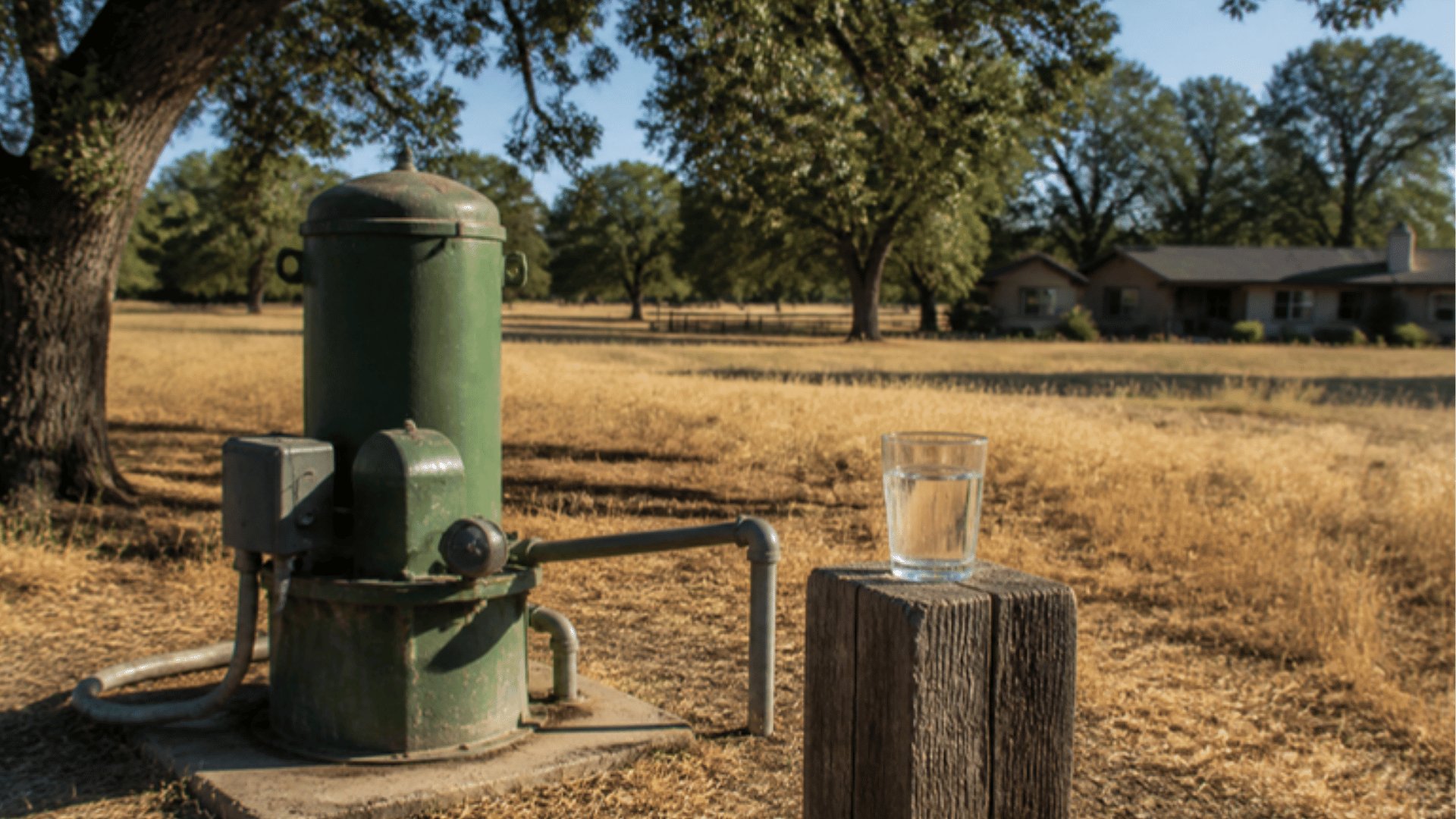
A few miles north of downtown Sacramento, the Rio Linda-Elverta Community Water District published its annual water quality report late last month, and one line stood out: the average level of hexavalent chromium in its wells came in at 10.6 parts per billion, just over California's limit of 10. Nobody is being told to stop drinking the water, and the district is not in violation. But the number is a good excuse to explain a contaminant most people have only heard of from a movie.
What the report actually shows
Rio Linda Online reviewed the district's 2026 Consumer Confidence Report, which covers testing done in 2025. Across the district's 12 groundwater wells, individual chromium-6 results ranged from 4.2 to 18 parts per billion, with the average landing at 10.6 ppb. That average is a blend of all reported samples, not a level found at every tap, and some wells sit well under the limit while others sit over it.
The rest of the report is reassuring. All 208 bacteria samples taken in 2025 came back clean. Arsenic averaged 5.7 ppb against a limit of 10, nitrate averaged 1.2 parts per million against a limit of 10, and the only PFAS compounds detected were PFHxA and PFHxS at low levels, with no PFOA or PFOS found.
So why isn't a 10.6 ppb average a violation? Because California phased in its chromium-6 standard. According to Rio Linda Online, a system of this size "has until Oct. 1, 2027, to meet the standard," and the district says treatment systems are being designed for three well sites, expected to be running before that deadline.
Chromium-6, briefly
Chromium is a naturally occurring metal that shows up in two common forms. Trivalent chromium (chromium-3) is an essential trace nutrient found in food. Hexavalent chromium (chromium-6) is the form that made the town of Hinkley, California famous in the film Erin Brockovich, and it is the form regulators worry about in drinking water.
California is the only state with a drinking water limit specifically for chromium-6. The State Water Resources Control Board set the maximum contaminant level at 10 micrograms per liter (the same as 10 ppb) with an effective date of October 1, 2024. The state's Office of Environmental Health Hazard Assessment has a far lower public health goal of 0.02 micrograms per liter, the level it considers to pose no significant health risk over a lifetime, and the Water Board notes that chromium-6 has been shown to be carcinogenic when ingested. The district's own report puts it plainly: people who drink water above the limit over many years "may have an increased risk of getting cancer."
Where does it come from? The report lists the two typical sources, erosion of natural deposits and discharge from industrial activity, and does not pin Rio Linda's chromium on any particular property or business. That is common in the Sacramento Valley, where groundwater moving through certain soils and rock can pick up chromium on its own, with or without an industrial neighbor.
Why it's a groundwater story
Rio Linda and Elverta drink entirely from wells, and that matters. Chromium-6 is a dissolved metal, so it is invisible in a glass, has no taste or smell, and does not settle out. Surface water systems, like the ones drawing from Folsom Lake and the American River for Folsom, Roseville and much of Sacramento, tend to see much lower chromium levels. Communities on groundwater, including many in Placer, El Dorado and Sonoma counties and anyone on a private well, are the ones who should look at the number in their report.
At the utility level, chromium-6 is removed with specialized treatment at the wellhead, which is exactly what Rio Linda-Elverta is designing now. In a home, point-of-use reverse osmosis is designed to reduce dissolved contaminants like chromium-6, along with nitrates, arsenic, lead and PFAS, which is why RO is usually the piece of a filtration system aimed at drinking and cooking water specifically. A whole-home carbon filter and softener handle a different set of jobs: chlorine and chloramine (and the dry hair and dry skin that come with them), sediment, hardness and taste and odor. Carbon alone does not address chromium-6.
How to check your own water
Every public water system in California publishes a Consumer Confidence Report by July 1 each year, and chromium-6 has its own line in the table. Rio Linda-Elverta's is posted on the district's website. You can also enter your zip code at EWG's Tap Water Database, which pulls the same state testing data and compares it against both the legal limit and the stricter public health goal.
If you are on a private well, nobody tests for you. A lab test for metals, including chromium-6 and arsenic, is inexpensive, and a one-time result is enough to know whether an RO system belongs under your sink.
Curious what's in your water? Book a complimentary water test — about 30 minutes, no obligation.
Healthier water, healthier family.
Sources
- Rio Linda Online, "District Report Details Chromium Levels as Treatment Plans Move Forward," October 26, 2026 — https://www.riolindaonlinenews.com/2026/10/26/district-report-details-chromium-levels-as-treatment-plans-move-forward/
- California State Water Resources Control Board, "Hexavalent Chromium MCL," page updated September 1, 2026 — https://www.waterboards.ca.gov/drinking_water/certlic/drinkingwater/Chromium6.html
- Rio Linda-Elverta Community Water District, "2026 Consumer Confidence Report" — https://www.rlecwd.com/files/fb6e8ddf4/2026%2BConsumer%2BConfidence%2BReport%2B%28CCR%29.pdf