
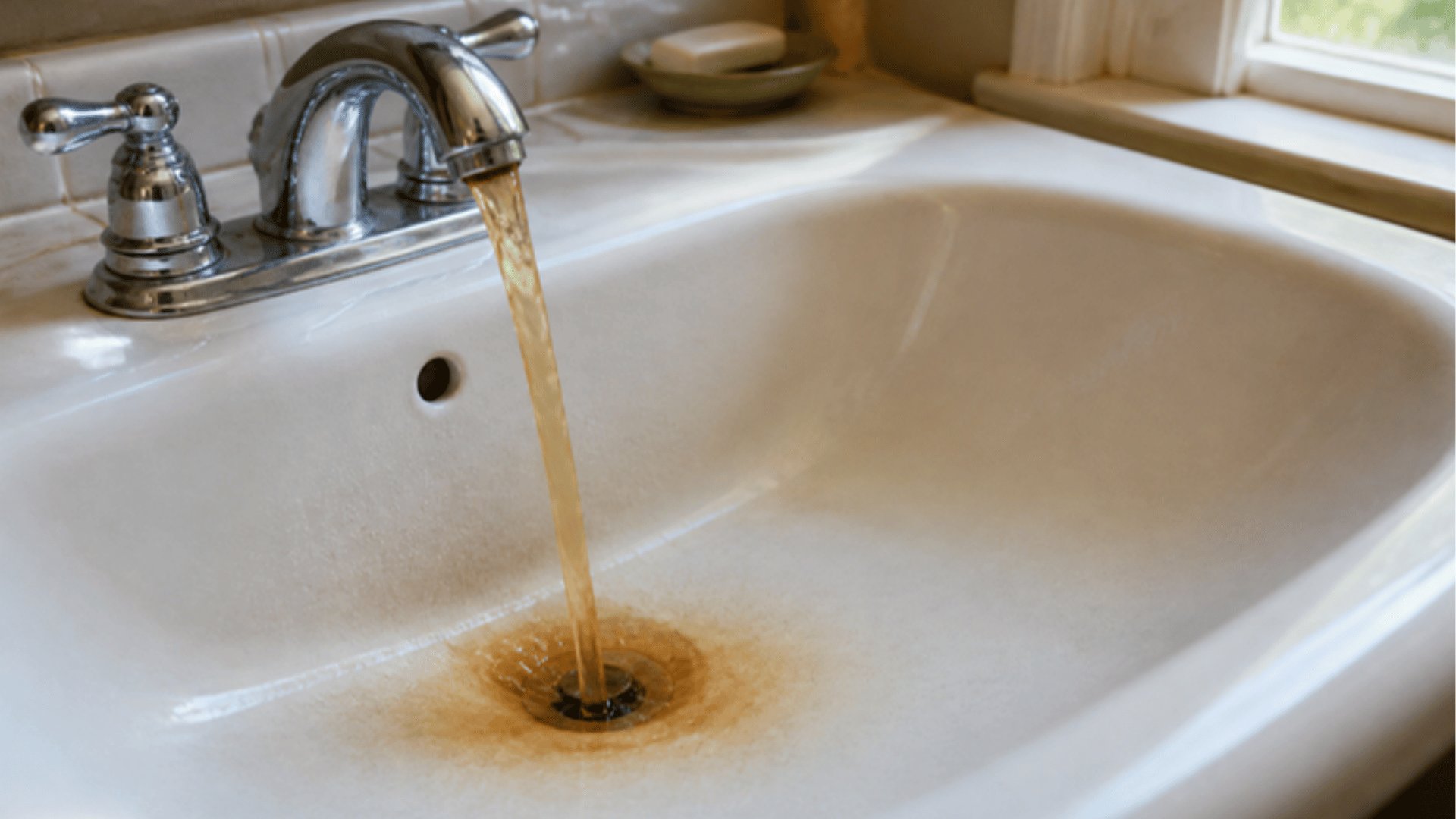
If you have ever turned on the tap and watched rusty, tea-colored water pour out, you know the feeling: you stop, you stare, and you wonder what you have been drinking. For the Napa Valley town of St. Helena, that moment has repeated itself for years. Late last month the city began flushing roughly 40 miles of water mains to scrub out decades of mineral buildup, and the science behind it applies to plenty of homes in the Sacramento region and the North Bay too.
What's happening in St. Helena
St. Helena's water system has been delivering discolored water on and off for about five years, usually between June and September. According to the Press Democrat, the city's new flushing program uses a closed-loop, zero-discharge process to clean the pipes section by section, and a pilot run in June cleared minerals from about seven miles of mains. City officials attribute the discoloration to iron and manganese that have built up inside the distribution system over decades.
KTVU reported that two of the town's three primary water sources carry naturally high levels of iron and manganese, and that some of its pipes are more than 100 years old. The minerals settle quietly inside the mains under normal pressure. Then something disturbs the water — a main break, a hydrant opening, a stretch of heavy demand — and the rushing flow carries that sediment straight into kitchens and bathrooms. A dramatic example came on July 18, when a tour bus struck a fire hydrant on Main Street, releasing about 4,500 gallons a minute and creating what city staff called "an epidemic of brown water throughout the city."
A full fix is estimated at $50 million to $60 million for a town of about 5,100 people, and officials say clearing the system could take years. Issam Najm, the environmental engineer advising the city, summed up why residents are so frustrated: "It's about laundry, it's about washing, it's about everything."
Why iron and manganese turn water brown
Iron and manganese are two of the most common minerals in groundwater and in reservoirs that pull from mineral-rich soils. Dissolved in water, they are invisible. The trouble starts when they meet oxygen or chlorine and change form: iron becomes the reddish-orange rust you see in a stained sink, and manganese becomes a dark brown or black film. Those particles settle inside pipes and wait.
The U.S. Environmental Protection Agency sets aesthetic benchmarks for both. Iron above 0.3 milligrams per liter produces a rusty color, sediment, a metallic taste, and reddish or orange staining. Manganese above just 0.05 milligrams per liter produces a brown-to-black tint, black staining, and a bitter metallic taste. Those numbers are tiny, which is why a little mineral goes a long way.
California's State Water Board keeps a separate response level of 0.20 milligrams per liter, mainly because very young, formula-fed infants are the most sensitive to it. St. Helena's officials have not described their water as a health risk, but they do advise against drinking water you can see color in, and that is sound advice anywhere.
Why this matters in a Northern California home
You don't have to live in St. Helena to see rusty water. Homes in the Sierra foothills of Placer and El Dorado counties and in rural Sonoma and Marin often rely on wells drawing from the same kind of mineral-rich ground. Older neighborhoods in Sacramento, Roseville, and Folsom have galvanized steel plumbing that sheds rust from the inside as it ages. And any town's hydrant flushing, main repair, or fire-flow test can stir up sediment that has been sitting in the mains for years.
In the house, iron and manganese show up as orange rings in the toilet, dark streaks in the dishwasher, dingy laundry, a metallic taste in coffee, and a slow buildup inside the water heater. Hard water compounds the problem, because scale gives the minerals a rough surface to cling to.
This is where home treatment is designed to help. Whole-home filtration addresses sediment, chlorine, chloramine, and taste and odor at the point where water enters the house, so rust particles stirred up in the street don't end up in your shower or washing machine. A softener handles the hardness that makes scale and staining worse. Reverse osmosis at the kitchen sink addresses dissolved contaminants that a sediment filter cannot catch — manganese and other metals, along with nitrates, PFAS, and lead — for the water you actually drink and cook with.
How to check your own water
Start with your utility's Consumer Confidence Report, published every year, which lists iron and manganese results alongside everything else that was tested. Look up your zip code in the Environmental Working Group's Tap Water Database for a plain-English summary. If your water is discolored right now, run a cold tap for a few minutes; if it clears, the sediment was in the pipes, and if it stays brown, call your utility. For a well, nothing beats a test at the tap, because no one else is testing it for you.
Curious what's in your water? Book a complimentary water test — about 30 minutes, no obligation.
Healthier water, healthier family.
Sources
- Press Democrat, "St. Helena's citywide water pipe flushing starts Monday," October 25, 2026 — https://www.pressdemocrat.com/2026/10/25/st-helenas-citywide-water-pipe-flushing-starts-monday/
- KTVU, "St. Helena faces $60M fix, long timeline to resolve persistent brown tap water," September 8, 2026 — https://www.ktvu.com/news/st-helena-faces-60m-fix-long-timeline-resolve-persistent-brown-tap-water
- Press Democrat (via California River Watch), "After 'epidemic of brown water,' St. Helena working on strategy to mitigate decades-long problem," September 14, 2026 — https://criverwatch.org/2026/09/14/after-epidemic-of-brown-water-st-helena-working-on-strategy-to-mitigate-decades-long-problem/
- U.S. EPA, "Secondary Drinking Water Standards: Guidance for Nuisance Chemicals," updated May 26, 2026 — https://www.epa.gov/sdwa/secondary-drinking-water-standards-guidance-nuisance-chemicals
- California State Water Resources Control Board, "Manganese in Drinking Water," updated June 17, 2026 — https://www.waterboards.ca.gov/drinking_water/certlic/drinkingwater/Manganese.html