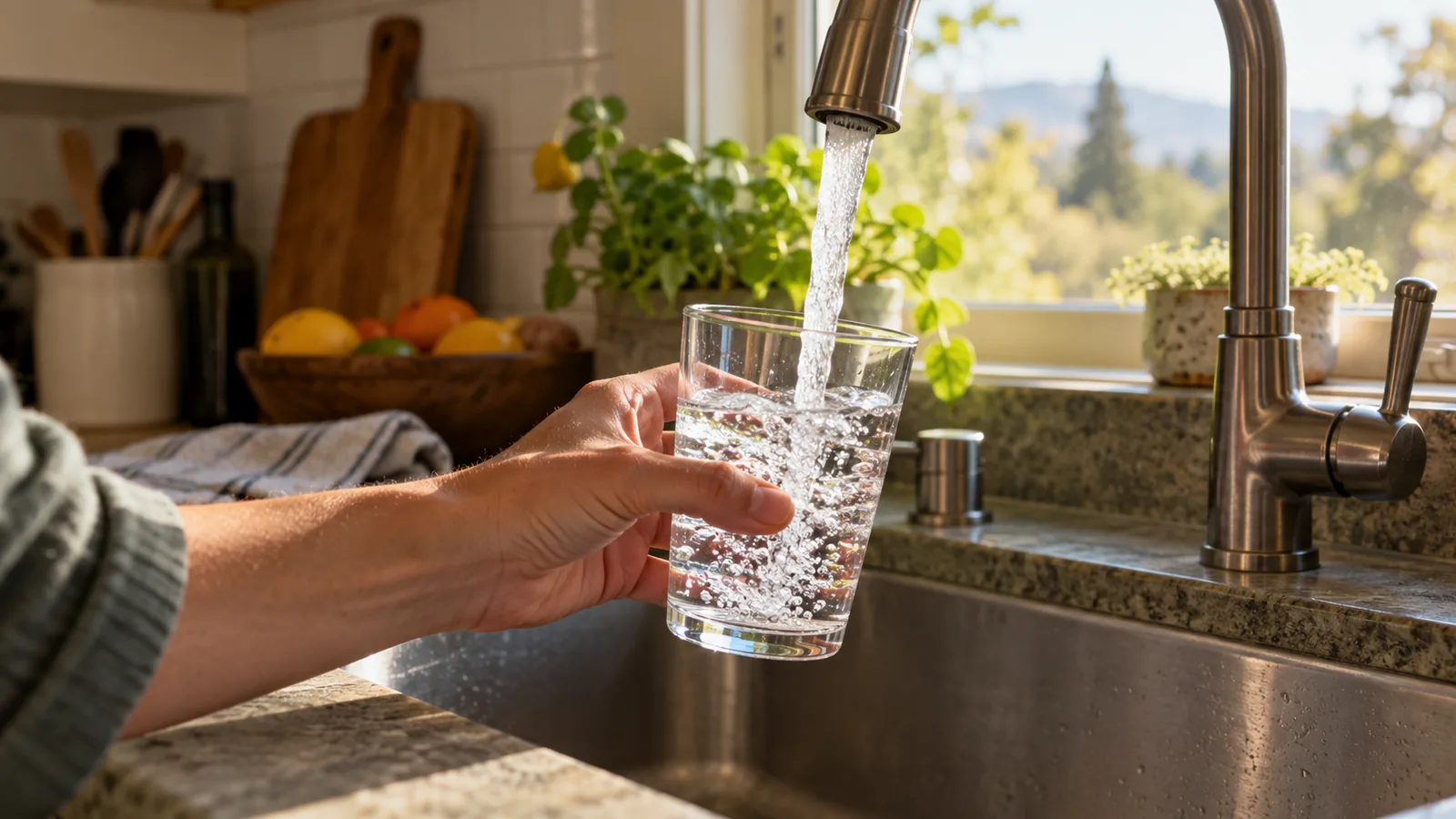
Notice a chlorine smell when the shower starts? Dry skin afterward, brittle-feeling hair, or kids with dry skin after bath time belong in the water conversation, too. Whole-home carbon treats water before it reaches the showers and taps. Start by checking whether your utility uses chlorine or chloramine so the carbon system is matched to the disinfectant.
Why utilities disinfect water at all
Disinfection kills or inactivates bacteria and viruses that can make people sick. The water also has to stay protected as it travels miles of pipe to your home. That second job is called secondary disinfection, and it's where chlorine and chloramine come in (EPA).
To be clear: disinfected tap water is a public health success. The EPA and CDC both state that the benefits of disinfection outweigh the potential risks from its byproducts (EPA). Filtering at home isn't about distrusting your utility. It's about deciding what you want at the tap once the water has done its traveling.
Chlorine vs. chloramine: the difference
| Chlorine | Chloramine | |
|---|---|---|
| What it is | Free chlorine added at the treatment plant | Chlorine combined with a small amount of ammonia |
| How long it lasts | Dissipates faster | Longer-lasting in the pipes |
| Disinfection byproducts | Forms more regulated byproducts | Forms fewer regulated byproducts |
| Federal limit | 4 mg/L (as Cl2) | 4 mg/L (as Cl2) |
| Leave a pitcher out overnight? | Some will dissipate | Much less effective |
Chloramines are most often formed by adding ammonia to chlorine, and they provide longer-lasting disinfection through the distribution system (EPA). Many utilities switched for a regulatory reason: chloramine produces fewer of the potentially harmful regulated disinfection byproducts than chlorine does (EPA).
Those byproducts are real and regulated. The EPA caps total trihalomethanes (TTHMs) at 0.080 mg/L and five haloacetic acids (HAA5) at 0.060 mg/L (EPA). Your utility's annual report lists its results for both.
Which one do you have?
In Greater Sacramento there's no single answer. Folsom, Roseville, Sacramento, Elk Grove and the foothill districts each run their own systems, and some buy water from neighbors. Your utility's annual water quality report, also called a Consumer Confidence Report, names the disinfectant. Search your city's name plus "water quality report," or ask us to pull it during your free test.
What you might notice at home
- Smell and taste. A chlorine or "medicinal" note, often strongest in a hot shower.
- Fish tanks. Chloramine must be removed before water goes into an aquarium, and standard dechlorinators may not handle it.
- Home dialysis. Utilities specifically notify dialysis users because chloramine has to be removed from dialysis water.
For most families the issue is comfort, not safety. People simply prefer water that tastes and smells like nothing.
Which filters reduce chlorine and chloramine?
Activated carbon is the standard tool for chlorine taste and odor. Look for certification to NSF/ANSI 42, the aesthetic-effects standard that covers chlorine taste and odor. One catch: a filter can earn NSF 42 for chlorine without being tested for chloramine (Water Filter Guru). Chloramine is harder to remove, so ask whether the carbon is catalytic or otherwise rated for it.
A few practical notes:
- A water softener does not remove chlorine or chloramine. Softeners handle hardness minerals. You need carbon for disinfectant taste and odor.
- Pitchers and fridge filters only cover one tap. They help with drinking water but not showers or laundry.
- Whole-home carbon treats every tap. It sits at the water main, so showers, sinks and appliances all get filtered water.
How Family First Water approaches it
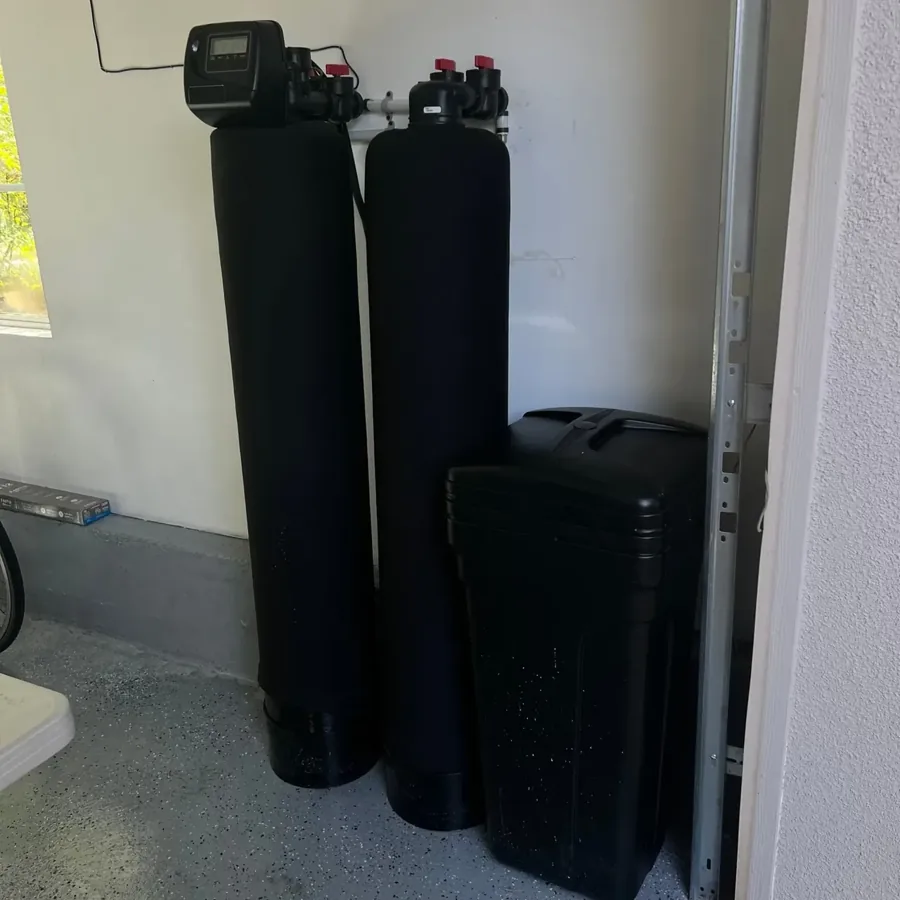
Our whole-home system pairs carbon filtration for chlorine-related taste and odor with softening for hardness, plus Legacy RO at the kitchen sink for drinking and cooking. We'll check what your utility uses and tell you plainly what the system is and isn't designed to address.
See what's in your water
Our complimentary in-home water test takes about 30 minutes and includes a chlorine screening. We'll explain the results and show how our complete system addresses chlorine-related taste and odor, hardness, and drinking water throughout the home. Call 916-751-1781 or book online.