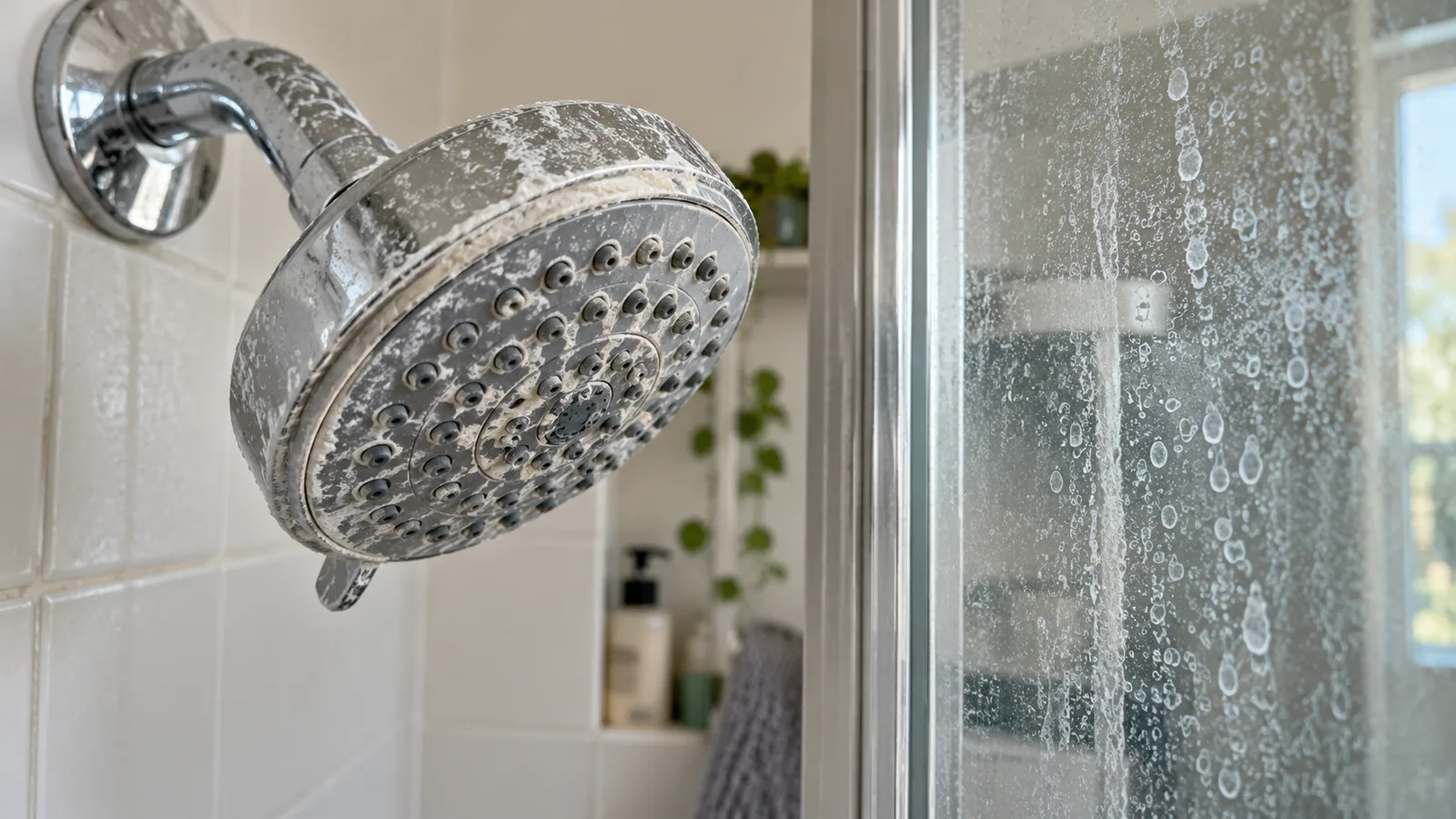
The shower glass looks cloudy again. Soap scum clings to the tub, and white crust collects around the faucet. Hard-water minerals leave that work behind. Here’s what they do in a Sacramento home and how softening tackles the cause.
What "hard water" means
Hardness comes from dissolved calcium and magnesium. The EPA has no legal limit for hardness because those minerals aren't toxic (USGS). It's a home and appliance issue, not a health one.
Utilities report hardness in mg/L (same as ppm). Water treatment pros often use grains per gallon (gpg). To convert, divide mg/L by 17.1.
| USGS category | mg/L as calcium carbonate | Grains per gallon (approx.) |
|---|---|---|
| Soft | 0–60 | 0–3.5 |
| Moderately hard | 61–120 | 3.5–7 |
| Hard | 121–180 | 7–10.5 |
| Very hard | Over 180 | Over 10.5 |
Source: USGS.
Is Greater Sacramento water hard?
It depends on your address, and that's not a dodge. The region draws from rivers, reservoirs and groundwater wells, and each behaves differently. Surface water from the American River tends to be softer. Groundwater usually carries more minerals.
For example, the City of Sacramento's 2025 report lists a system-average hardness of 83 mg/L, which is moderately hard, with different results for river water and groundwater (City of Sacramento 2025 report). Elk Grove, Roseville, Folsom and foothill districts all publish their own numbers, and homes on private wells in El Dorado and Placer counties can vary widely. A neighbor's result two miles away may not apply to you. See our Sacramento hard water guide for more on local supplies.
What hardness does to your home
Scale on fixtures and glass. As hard water evaporates or heats up, minerals are left behind as white, chalky scale. You see it on shower doors, faucets and dishware.
More soap, less lather. Hard water requires more soap and detergent for laundry and washing (USGS).
Water heaters and appliances. This is where the research gets specific. A Battelle laboratory study, commissioned by the Water Quality Association, tested 30 water heaters plus showerheads, faucets, dishwashers and washers on softened vs. unsoftened water under accelerated conditions (WQA). Key findings:
- Gas storage and tankless water heaters on softened water kept their efficiency essentially constant (Contractor).
- Low-flow showerheads and faucets on unsoftened water clogged in under seven days of accelerated testing; softened-water units made it through without problems (Contractor).
- Electric storage water heaters showed no difference in electricity use between softened and unsoftened water (Contractor).
In fairness, the study was industry-funded and used accelerated lab conditions, so real-world results depend on your hardness level and water use. But the direction is consistent: less scale means fixtures and gas or tankless heaters hold up better.
Softener or filter? They do different jobs
- A water softener uses ion exchange to swap calcium and magnesium for sodium (USGS). It targets scale. It does not remove chlorine taste and odor.
- A carbon filter targets chlorine-related taste and odor. It doesn't soften water.
- Reverse osmosis at the kitchen sink provides drinking water and removes much of the sodium a softener adds.
That's why many homes pair them. Read more in whole-house filter or water softener?
When a softener makes sense
A softener is worth a serious look if:
- Your report or test shows hard or very hard water (above about 7 gpg).
- You have a gas or tankless water heater you want to protect.
- You're constantly scrubbing scale off glass, faucets or tile.
- You're on a private well with high mineral content.
Find out where your home stands
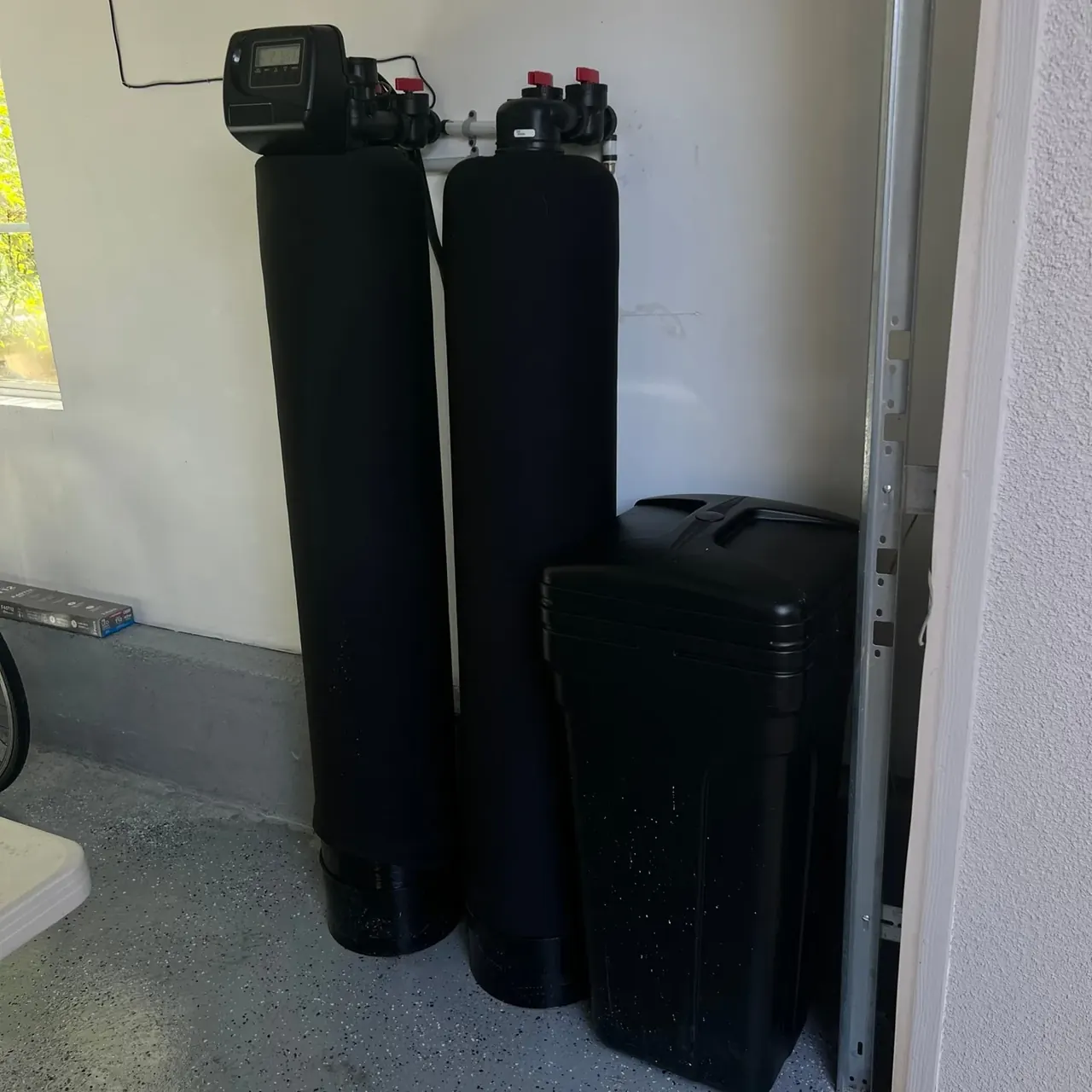
Our complimentary in-home water test takes about 30 minutes. Show us the spots and buildup that bug you, and we'll walk through your supplier's hardness numbers together. Our whole-home filtration and softening system combines filtration, softening and kitchen reverse osmosis in one coordinated package. We'll explain salt, maintenance and installation up front. Call 916-751-1781.