Your shower and your drinking glass don’t need the same setup. Whole-home filtration treats water as it enters the house; reverse osmosis supplies a separate kitchen faucet. Together, they cover the water you wash with and the water you fill bottles from.
The one rule worth remembering
No single treatment process removes everything from water (Dakota County, MN). Each technology is good at specific jobs. The right setup starts with what's in your water and what you want to change.
Whole-home (point-of-entry) treatment
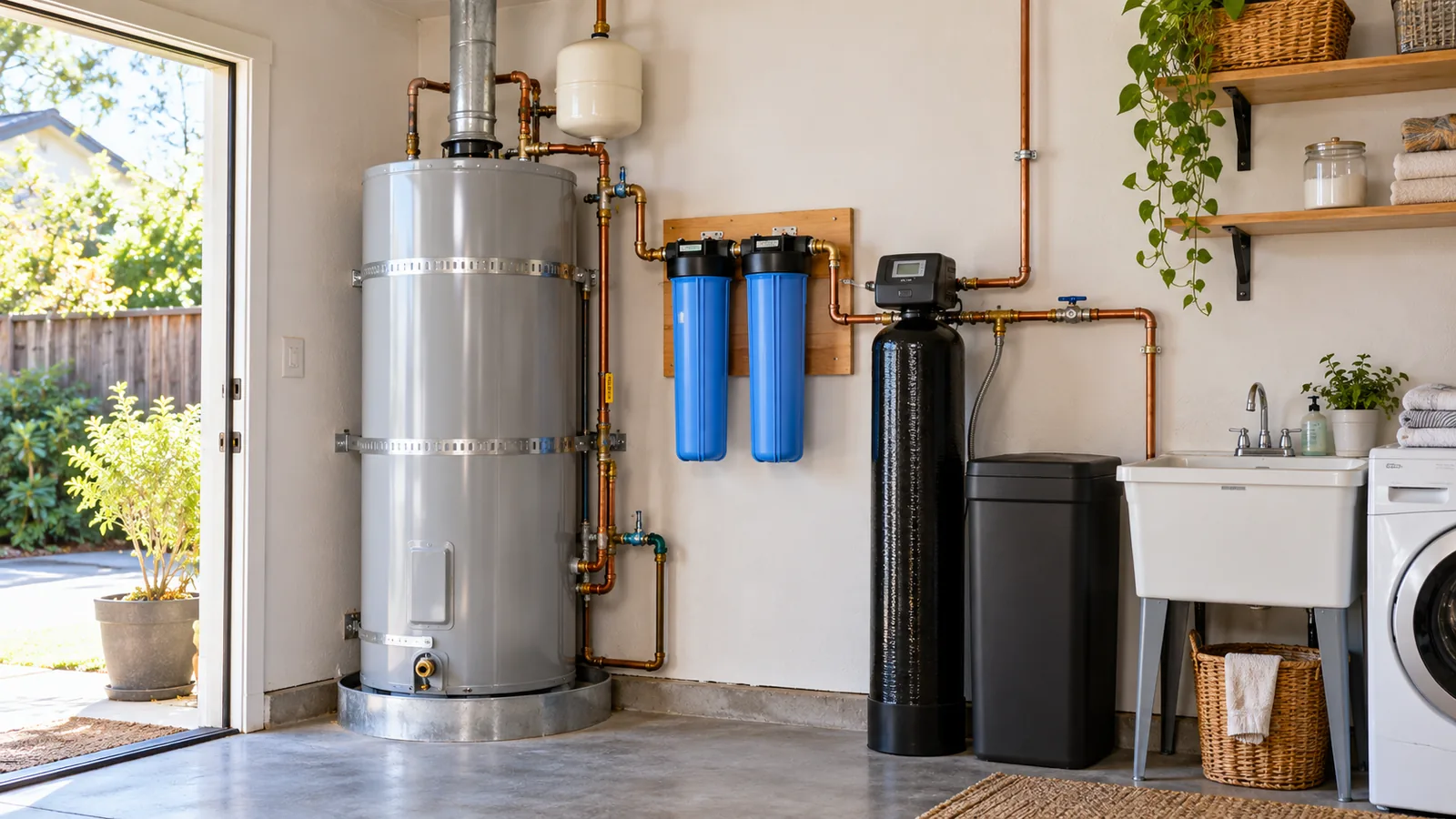
A whole-home system installs where water enters your house, so it treats most of the water you use: showers, laundry, bathroom sinks and appliances.
What it typically handles:
- Carbon filtration for chlorine-related taste and odor, in every tap and shower.
- Softening for hardness scale on fixtures, glass and water-using appliances.
- Sediment that can cloud water or wear on fixtures.
What it doesn't do well: a whole-home carbon and softener setup isn't designed to deliver the same level of drinking-water treatment as reverse osmosis.
Reverse osmosis (point-of-use)
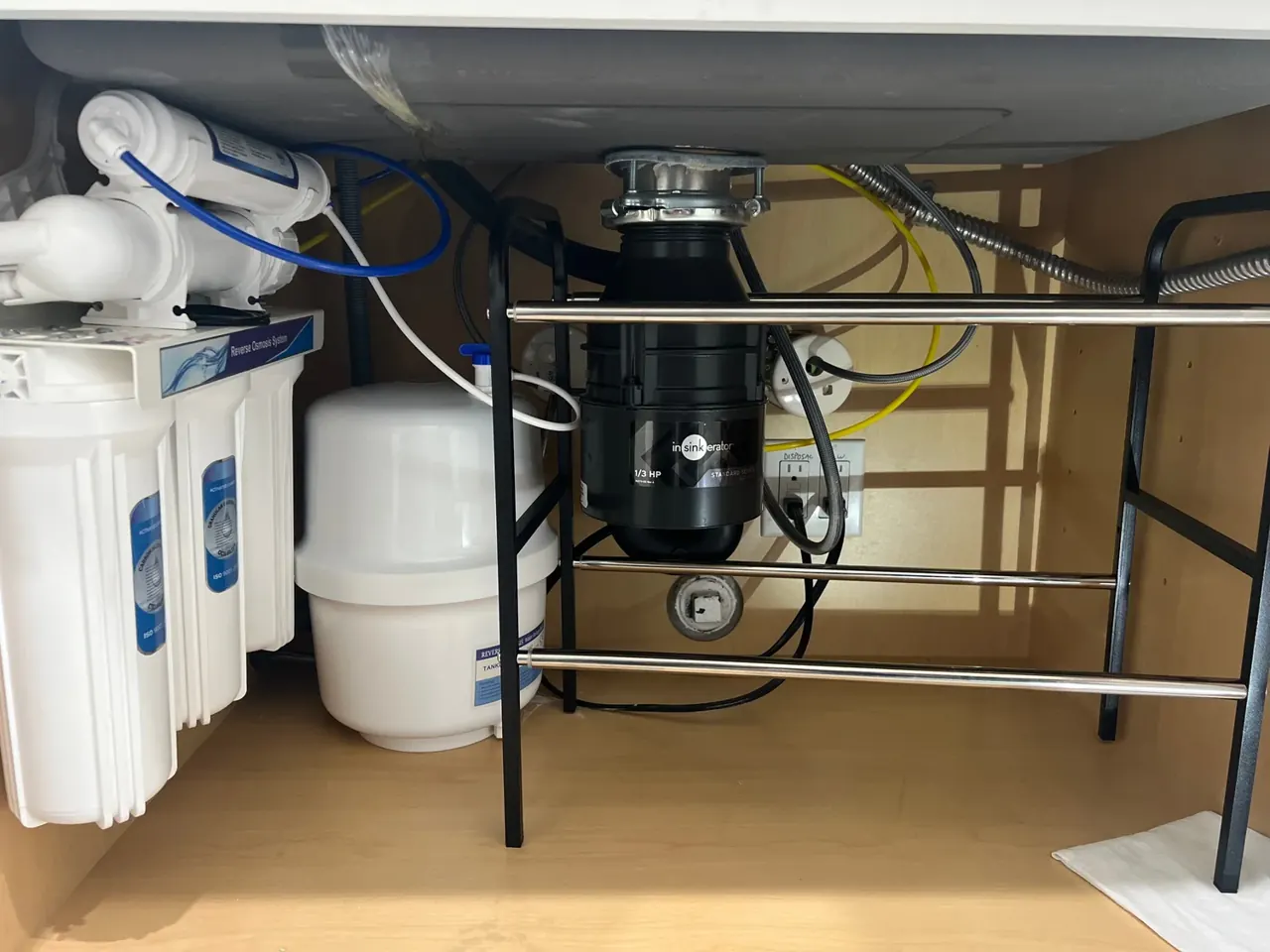
Reverse osmosis forces water through a very fine membrane, with a pore size of roughly 0.0001 micron. Along with pre- and post-filters, RO removes common dissolved chemical contaminants such as metal ions and salts (CDC guide via Island County, WA). EPA research also found RO among the technologies that can greatly reduce PFAS (EPA).
So why not run the whole house on RO? Because it isn't practical. RO units send a portion of incoming water to the drain, and treating every shower and load of laundry that way would waste a lot of water (UMass Extension). That's why RO is typically installed at the kitchen sink, for the water you actually drink and cook with (Minnesota Dept. of Health).
Trade-offs to know:
- RO also removes minerals like calcium and magnesium. Many systems add a remineralization stage afterward.
- Chlorine, hardness and sediment can affect RO membrane performance, so pretreatment matters (UMass Extension).
- Filters and membranes need periodic replacement.
Side by side
| Whole-home filtration + softening | Reverse osmosis | |
|---|---|---|
| Where it's installed | At the water main | Under the kitchen sink |
| Water it treats | Showers, laundry, every tap | Drinking and cooking water |
| Best at | Chlorine taste/odor, hardness scale, sediment | Dissolved solids, many dissolved contaminants |
| Main limitation | Not drinking-water-grade on its own | Not practical for the whole house |
| Maintenance | Salt and filter changes | Filter and membrane changes |
Why they work best together
Think of it as two layers. The whole-home system improves the water everywhere: showers without the chlorine smell, glass without the scale, appliances that see fewer minerals. Then RO polishes the water you put in your body. The whole-home layer also does useful pretreatment for the RO membrane by taking out chlorine and hardness first.
For homeowners who want better water throughout the house and dedicated drinking water at the kitchen, the two layers work together as one coordinated system:
- Whole-home filtration helps address chlorine-related taste and odor throughout the home.
- Softening helps address hardness scale on fixtures and water-using appliances.
- Kitchen reverse osmosis provides dedicated drinking and cooking water.
- Private well? Lab results may identify additional treatment needs, such as UV or sediment prefiltration, alongside the coordinated system.
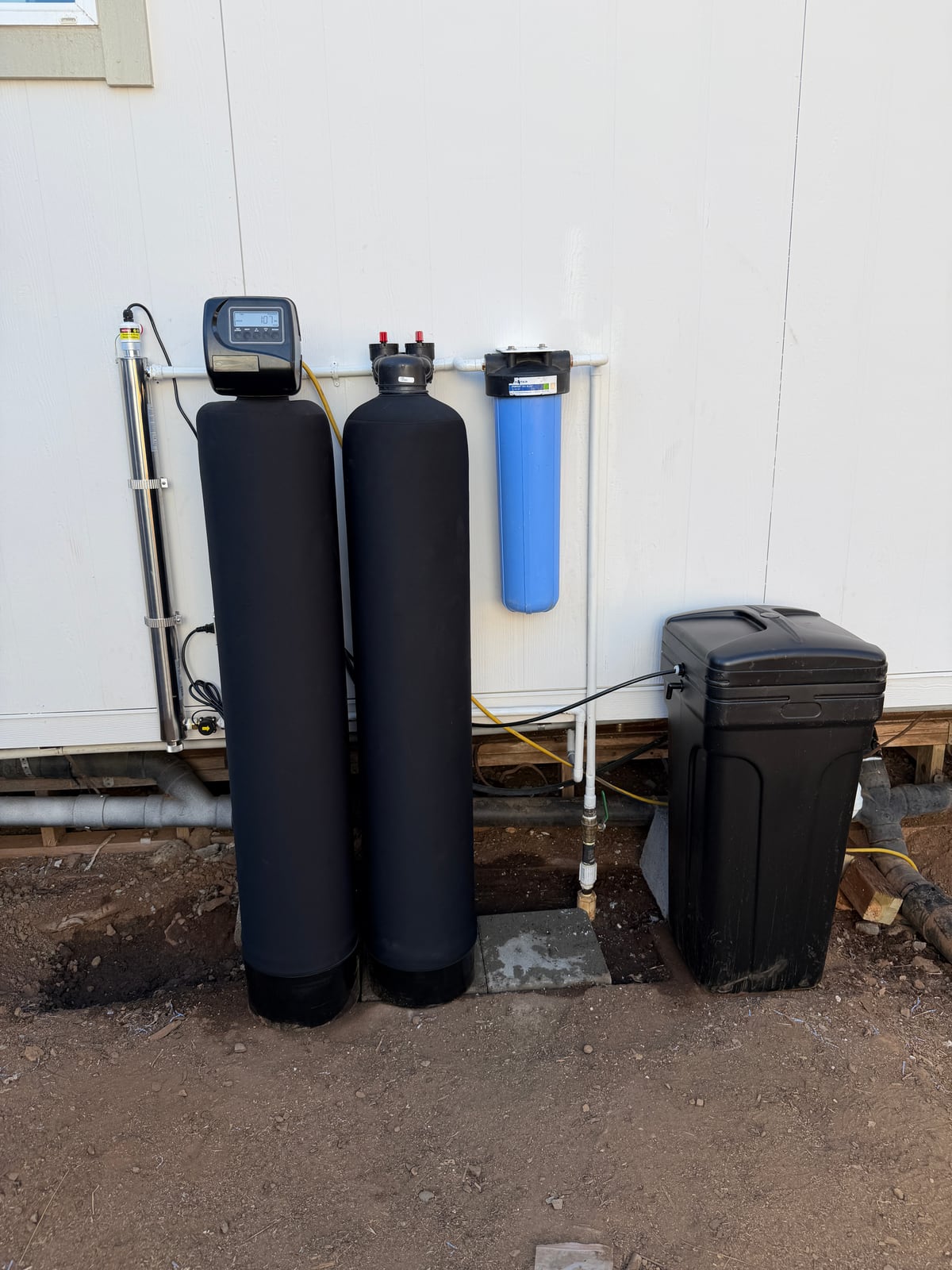
A real Family First Water well-water treatment installation.
How we set it up
The Family First Water package includes both layers: the Legacy Premier dual-tank whole-home system with carbon filtration and softening, plus Legacy RO with an alkaline remineralization stage and a dedicated drinking-water faucet. The whole-home system carries a 10-year limited warranty and Legacy RO a 5-year limited warranty, and financing is available for qualified buyers.
Our complimentary in-home water test takes about 30 minutes, and we'll walk you through how the complete system fits your home and water goals. Call 916-751-1781.